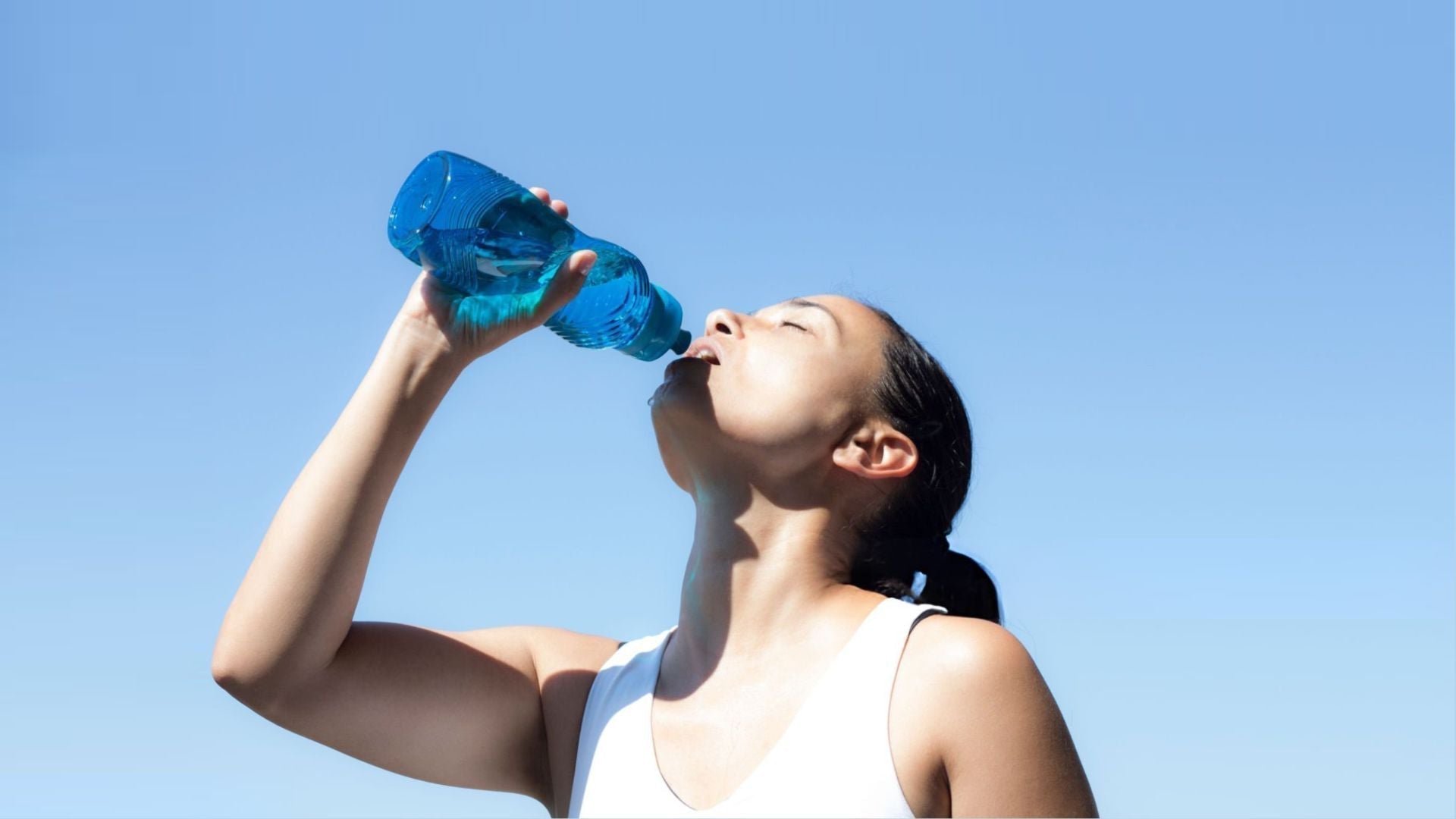
- Most popular drink claims are marketing, not medicine. Juice cleanses, alkaline water, vitamin drinks, and sports beverages often promise more than science supports.
- Your body is highly self-regulated. It detoxes itself, controls pH, determines height genetically, and adapts hydration needs individually.
- Plain water works for most people. For everyday hydration and typical workouts, you don’t need specialty drinks — just adequate, clean water.
- What truly matters isn’t hype - it’s purity. In a world of microplastics and contamination risks, ensuring access to fresh, properly filtered water is one of the simplest, smartest health decisions you can make.
From juice cleanses to alkaline water, the beverage aisle is full of bold promises. Detox. Energy. Hydration hacks. Glowing skin.
The problem? Many of these claims sound scientific, but don’t hold up under actual science. Most of are just marketing fluff dressed up as science.
Here are 10 of the most common drink myths – busted!
1. Myth: Everyone must drink exactly 2 liters of water daily
The truth: Hydration needs are individual.

The “8×8 rule” (eight 8-ounce glasses) roughly equals about 2 liters per day, but this guideline is outdated and overly simplistic. Your hydration needs depend on body size, climate, activity level, diet, and overall health. Some people need more, some need less. Thirst and urine colour are far better indicators than forcing a fixed number.
2. Myth: Alkaline water changes your blood pH
The truth: Your body regulates pH on its own.

Your blood stays within a very narrow pH range thanks to your lungs and kidneys. Drinking alkaline water doesn’t meaningfully alter that. Once it hits your stomach, it’s neutralized by acid. The body — not the bottle — controls your chemistry.
3. Myth: Your body needs juice cleanses to detox
The truth: Your body already detoxes itself.

Your liver, kidneys, lungs, digestive tract, and lymphatic system work around the clock to eliminate waste. Juice cleanses don’t “flush toxins”. They mostly restrict calories and nutrients. In extreme cases, they can do more harm than good.
4. Myth: Vitamin-enhanced drinks are a healthy daily upgrade
The truth: Most people already get sufficient vitamins from food.

Many vitamin drinks contain added sugar and megadoses of nutrients you likely don’t need. Water-soluble vitamins are excreted through the kidneys if consumed in excess, while fat-soluble vitamins are processed and stored in the liver. In very high amounts, certain vitamins can accumulate and may in fact, cause unwanted effects.
5. Myth: Mineral water is significantly healthier because of its minerals
The truth: Most of your minerals come from food - not water.

Mineral water often highlights calcium, magnesium, or trace elements on the label, implying meaningful health benefits. In reality, the amounts are typically modest compared to what you obtain from whole foods like vegetables, nuts, dairy, legumes, and grains.
While certain mineral waters can contribute small amounts of nutrients, they are rarely a primary or necessary source for healthy individuals eating a balanced diet.
It’s also worth remembering that the term “mineral” simply refers to naturally occurring inorganic substances. Not all minerals are beneficial in all amounts. Some contaminants found in water (such as heavy metals) are technically minerals as well.
In short, minerals in water aren’t inherently harmful, but they’re often more of a marketing highlight than a meaningful nutritional upgrade.
6. Myth: Sparkling water weakens your bones
The truth: Carbonation isn’t the culprit.

Research hasn’t shown plain sparkling water to harm bone density. Earlier concerns were tied to phosphoric acid in cola beverages, not carbonation itself.
7. Myth: Spring or mountain water is cleaner than recycled or treated water
The truth: How water is filtered matters far more than where it comes from.

Many bottled or gallon waters emphasize romantic origins — mountain springs, glaciers, or underground aquifers — suggesting that the source itself guarantees purity. In reality, all natural water sources can contain contaminants such as bacteria, heavy metals, microplastics, or agricultural runoff.
What ultimately determines water quality is how it is treated and filtered, not simply where it originated. Modern purification technologies such as reverse osmosis can remove contaminants very effectively, regardless of whether the water began as groundwater, surface water, or reclaimed water.
In other words, the treatment process — not the marketing story about the source — is what truly determines how clean the water is.
8. Myth: Detox teas flush toxins out
The truth: Many simply act as laxatives.
 Some detox teas contain herbs that stimulate bowel movements. That temporary “lighter” feeling? Often just water loss. Your liver and kidneys already perform detoxification efficiently. No tea required.
9. Myth: Sports drinks are necessary after every workout
The truth: Water works for most exercise sessions.

Sports drinks were originally formulated for endurance athletes training intensely for over an hour, where significant sweat and carbohydrate losses occur. For a typical gym session or recreational jog, plain water replaces fluids effectively.
The much-touted “electrolytes” in sports drinks are largely sodium, essentially just table salt, which can be replaced, if needed, by a small pinch added to water after heavy sweating. For most casual workouts, the added sugars and sodium in commercial sports drinks offer little advantage.
10. Myth: Coconut water is the perfect electrolyte solution
The truth: It’s hydrating, but not superior.

Coconut water contains potassium but often lacks enough sodium to replace heavy sweat losses. It’s a fine beverage choice, but it isn’t biologically superior to water for most people.
So What Isn’t a Myth?
After clearing away the hype, one fact remains refreshingly simple:
Doctors and health experts consistently agree that drinking clean, plain water is essential.
Not alkaline. Not vitamin-infused. Not detox-enhanced. Just clean water.
And here’s where things get more complicated than they seem.
In today’s environment, “clean” isn’t always guaranteed. Studies increasingly detect contaminants such as microplastics in bottled water. Refillable gallon containers and dispenser tanks can become breeding grounds for bacteria if not properly maintained. Even the storage tank inside traditional filtration systems can introduce secondary contamination over time.
In other words: hydration matters - but so does purity.
This is where modern filtration technology quietly becomes relevant. Tankless reverse osmosis systems, such as those from Waterdrop, are designed to address precisely these concerns. Unlike traditional RO systems that store filtered water in a tank (where stagnation can occur), tankless systems filter water on demand. That means fresher output, reduced contamination risk from internal storage, and significantly lower Total Dissolved Solids (TDS) levels.
Waterdrop’s high filtration speed and improved water recovery rate make a tankless design practical, delivering clean water quickly without the need for a bulky reservoir. The result is water that is not only purified to a high standard, but also freshly filtered at the moment you need it.
No gimmicks. No miracle claims. Just measurable filtration performance.
Sources:
- 4 coffee myths debunked by science | Popular Science
- 6 hydration myths that could be hurting your health | National Geographic
- 18 Health Stresses You Can Leave Behind in 2026 - CNET
- Navigating hydration: Separating science from marketing hype | Research | University of Stirling
- 5 BIGGEST HYDRATION MYTHS — The Dish on Science